
Export taxation basics: a practical guide for SMEs

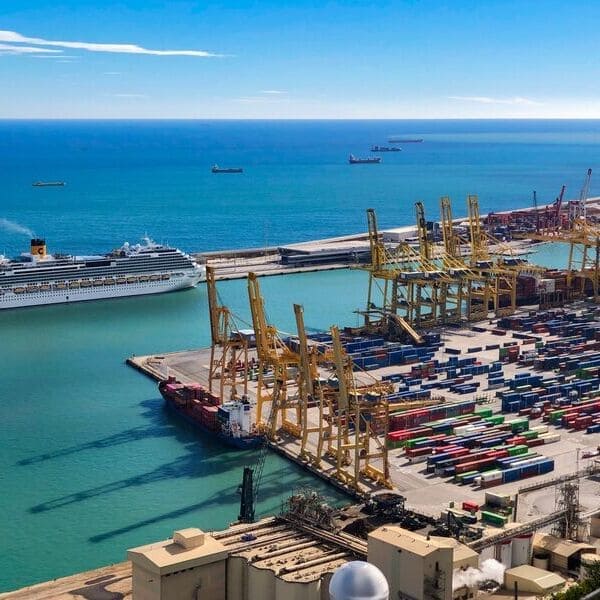
Selling abroad without charging VAT is perfectly legal, but only if you can prove the goods left the UK. A missing proof of export can turn a zero-rated sale into a 20% VAT bill from HMRC.
Exporting is one of the fastest ways for a small business to grow, yet tax questions often hold companies back. Do I charge VAT? What goes on my VAT Return? Which documents must I keep? This guide covers the essentials, with practical examples from UK companies, so you can sell abroad with confidence.
The principle is simple. VAT is charged where goods are consumed. That is why your exports leave the UK at 0% VAT, and your customer pays the import taxes in their own country. What changes is the procedure, depending on where you sell and to whom.
Export taxation: Exporting goods, zero-rated VAT
When you sell goods from Great Britain to a customer outside the UK, the sale is an export and is zero-rated: it is subject to VAT, but at 0%. Unlike an exempt sale, a zero-rated sale lets you reclaim all the VAT you paid on related purchases.
Zero-rating depends on two conditions set out in VAT Notice 703: the goods must leave the UK within 3 months of the sale, and you must obtain valid evidence of export within the same 3 months. Without that evidence, HMRC will assess VAT at the standard rate. If your customer collects the goods themselves (an indirect export), the conditions are stricter.
Example: a sale to Mexico. A textile manufacturer from Manchester sells fabrics worth £20,000 to a distributor in Monterrey. Because the goods leave the UK, the invoice shows 0% VAT and states that the sale is a zero-rated export. The company keeps the export declaration and transport documents as proof of export. When importing the goods, the customer pays the customs duty and Mexican VAT (16%) in Mexico.
Example: recovering input VAT. A company from Birmingham buys raw materials for £50,000 plus £10,000 VAT (20%) and exports its entire output to Japan. Because its sales are zero-rated, its VAT Return shows a £10,000 repayment. HMRC (HM Revenue & Customs) usually lets businesses that are regularly owed a refund file monthly VAT Returns. The company can therefore recover its VAT every month instead of every quarter, and HMRC usually pays within 30 days of receiving the return. That makes a real difference to an exporting SME’s cash flow.
What if you export services? They follow their own rules. Under the general rule, business-to-business services supplied to a customer outside the UK are outside the scope of UK VAT (VAT Notice 741A). If an engineering consultancy from Leeds carries out a project for a US company, it charges no UK VAT, but it must keep evidence that its customer is a business.
Export taxation: Selling to the EU after Brexit
Since Brexit, goods sent from Great Britain to an EU country are exports, just like sales to the US or Japan. They are zero-rated under the same conditions: an export declaration and proof of export within 3 months. Your EU customer pays import VAT, and any customs duty, in their own country.
Example: a sale to France. A cosmetics company from Bristol sells £15,000 worth of goods to a distributor in Lyon. The invoice shows 0% VAT as a zero-rated export, and the freight forwarder lodges the export declaration. The French customer pays French import VAT (20%) on arrival. Because the products meet the rules of origin and the invoice carries a statement on origin, no customs duty is due under the UK–EU Trade and Cooperation Agreement.
What if you sell to consumers? Online sales of goods worth €150 or less can go through the EU’s Import One Stop Shop (IOSS). You charge the customer’s local VAT at checkout and declare it in a single monthly return, so the parcel is not held up at the border. An online shop from Brighton selling to German customers registers for IOSS and charges German VAT (19%) at checkout. Above €150, the customer normally pays import VAT and duty on delivery. Also note that since 1 July 2026 the EU charges a €3 customs duty on many low-value parcels.
Selling from Northern Ireland? Under the Windsor Framework, goods moved from Northern Ireland to the EU still follow EU single-market rules. They are “dispatches” rather than exports, reported in boxes 6 and 8 of the VAT Return and on an EC Sales List.
Finally, remember that you also buy. If you import a machine from an Italian supplier, you can use postponed VAT accounting. You declare the import VAT on your VAT Return instead of paying it at the border, so the net cash effect is usually zero.
The tax obligations you cannot forget
Zero-rating does not mean forgetting about HMRC. Export sales are cross-checked against customs data, and businesses that are always in repayment, such as exporters, are more likely to have their returns checked.
| Obligation | What you must do |
|---|---|
| Invoice | Customer details, description of the goods, Incoterm, the 0% rate and a note that the sale is a zero-rated export |
| VAT Return (Making Tax Digital) | Include exports in box 6 (total sales); no output VAT in box 1. Boxes 8 and 9 only apply to Northern Ireland–EU trade |
| Proof of export | Export declaration plus commercial evidence (invoice, transport documents, payment), obtained within 3 months |
| EORI number | A GB EORI number is required to export goods |
| Records | Keep VAT records for at least 6 years (10 if you use the One Stop Shop scheme) |
Have your evidence organised before you file. If HMRC asks for it and it is missing, the repayment can be delayed, or the sale assessed at 20%.
Export taxation: Customs and Incoterms, both affect your taxes too
To export goods you need a GB EORI number. Your freight forwarder or customs agent usually submits the export declaration on HMRC’s Customs Declaration Service on your behalf, but you remain responsible for the accuracy of the data.
Your product’s commodity code determines the duty your customer will pay at destination. The UK has trade agreements with the EU, Japan, Australia and the CPTPP countries, among others. If your goods meet the rules of origin and you include a statement on origin, your customer may pay reduced or zero duty. That is a powerful sales argument.
Incoterms decide who pays the taxes at destination. Under EXW, FCA or DAP, the customer pays the import duty and VAT. Under DDP, you pay them.
Example: a DDP sale to Spain. A furniture maker from Leeds agrees to sell DDP to a customer in Madrid to close the deal. As a result, it pays Spanish import VAT (21%) and any duty, and may have to register for VAT in Spain. If it did not factor this into the price, the margin disappears.
As for direct taxes, the profit from your exports is subject to UK Corporation Tax like any other income. If a foreign customer withholds tax on a services invoice, you can usually claim credit for it under the UK’s double taxation treaties.

The 5 most common mistakes in export taxation
- Zero-rating without proof of export. If the evidence is not in your records within 3 months, HMRC can charge VAT at 20% on the sale.
- Treating EU sales as they were before Brexit. Sales from Great Britain to the EU now need an export declaration and proof of export, like any other export.
- Zero-rating indirect exports too lightly. When the customer collects the goods, stricter conditions apply, and the risk sits with you.
- Choosing DDP without counting the taxes. A poorly costed DDP sale leaves you paying duty and VAT abroad, and possibly registering for VAT there.
- Ignoring commodity codes and rules of origin. A wrong code or a missing statement on origin can make your customer pay duty that could have been zero.
Export with confidence: we’re here to help
International taxation does not have to hold back your growth. Three habits (keep proof of export, use the right Incoterm and file consistently) will help you avoid most problems. For specific cases, always rely on your accountant or tax adviser.
Free help is also available: the UK Export Academy offers online training on customs, rules of origin and selling into new markets through business.gov.uk.
Planning to sell in Spain? At Barcelona Export, based in Barcelona, we help companies prepare their international expansion, from market analysis to an initial action plan. Write to us at and let’s start working on your project.