How to Calculate Your Export Price | Complete Guide

Calculating the export price of a product is one of the most critical—and most frequently improvised—decisions in the entire internationalisation process. Many companies simply calculate their domestic selling price, add “a little extra” to cover transport costs, and launch the product into foreign markets without any further analysis. The result is almost always the same: an export margin that is much lower than expected or a price that the target market is simply unwilling to accept.

Calculating the export price correctly requires finding the right balance between three variables that do not always point in the same direction: ensuring that the price is profitable for your company, acceptable for the distribution channel, and competitive in the target market. In this guide, we explain the complete methodology step by step, with numerical examples so that you can apply it directly to your own products.


1. Calculate the Actual Manufacturing Cost

Before you start exporting—and as the first step in calculating your export price—you need to know exactly how much it costs to manufacture one unit of your product. This manufacturing cost is made up of four elements:

  • Raw materials: the cost of purchasing the materials required to produce one unit.
  • Direct labour: the cost of the employees directly involved in the manufacturing process (machine operators, welders, production workers, etc.), excluding administrative, sales, and management staff.
  • Manufacturing overheads: energy, maintenance, quality control, indirect production staff, and general factory supplies. These costs are not linked to a specific unit but to the production process as a whole.
  • Depreciation and allocated manufacturing overhead: the depreciation of machinery and facilities over their useful life, together with the factory’s fixed costs allocated across total production.

Raw Material Example

To produce 1,000 bottles of wine, you purchase glass (€1,200), corks (€180), and labels (€120), for a total material cost of €1,500.

The raw material cost per unit is:

€1,500 / 1,000 = €1.50 per unit

Direct Labour Example

If you employ 2 production workers during one month with a total allocated labour cost of €6,400, and you manufacture 4,000 units, the direct labour cost per unit is:

€6,400 / 4,000 = €1.60 per unit

Alternatively, labour can be calculated based on production time. If manufacturing one unit takes 12 minutes (0.20 hours) and the operator’s hourly cost is €18/hour, the labour cost is:

€18 × 0.20 = €3.60 per unit

Depreciation Example

A machine costing €100,000 with a useful life of 10 years generates an annual depreciation expense of €10,000, rather than charging the entire investment to the first financial year.

The final formula for calculating the unit manufacturing cost is:

Total manufacturing costs / Number of units produced


Precio de exportación Preu d'exportació Export Price Prix d'exportation

2. Add Export-Specific Costs

This is where many companies make their first major mistake: they forget that export packaging is not the same as packaging for the domestic market. As a result, they fail to account for these costs properly when calculating their export price.

Export packaging serves several purposes: protecting the product, facilitating handling, complying with international regulations, reducing logistics-related damage, and reinforcing your brand image. It can be divided into several levels:

  • Primary packaging: packaging that is in direct contact with the product (bottle, bag, blister pack, food container, etc.).
  • Secondary packaging: groups several individual units together (cardboard boxes, dividers, retail packs, etc.).
  • Export logistics packaging: the most specialised level, including pallets, stretch film, corner protectors, reinforced cartons, and moisture protection.
  • International labelling: labels adapted to the destination market, including the local language, barcodes, CE marking where applicable, nutritional information, and logistics labels.

Practical Example

For an export shipment of 1,000 units, using individual boxes (€0.18), outer cartons (€0.09), pallets (€120), stretch film and protective materials (€80), and labelling (€60):

  • Variable packaging cost per unit: €0.18 + €0.09 = €0.27
  • Additional logistics cost per unit: (€120 + €80 + €60) / 1,000 = €0.26
  • Total export packaging cost: €0.27 + €0.26 = €0.53 per unit

The mode of transport also has a significant impact on packaging requirements. Sea freight requires enhanced moisture protection and stronger structural packaging, whereas air freight prioritises reducing weight and optimising volume.

One of the most common mistakes is to include only the cost of the box and the pallet while overlooking handling costs, additional protective materials, and related logistics expenses. As a result, the actual export margin is often lower than originally expected.


3. Calculate Your Total Export Cost

Once you have calculated your manufacturing cost and your export-specific costs, simply add them together:

Total Export Cost = Manufacturing Cost + Export Costs

Example: €3.20 + €0.60 = €3.80

This is your minimum actual cost before applying any profit margin to determine the appropriate export selling price.


4. Define Your Target Margin

Your profit margin is not an arbitrary figure. It depends on several factors, including the level of commercial risk, the expected sales volume, the commercial effort required, the degree of competition, and the brand positioning you want to achieve in your target market.

The formula is:

Export Price = Total Export Cost / (1 − Desired Margin)

Example: if you want to achieve a 25% margin, your export price would be:

€3.80 / (1 − 0.25) = €5.07

Depending on the agreed Incoterm, this could be your EXW (Ex Works) price or your base selling price.


5. Choose the Right Incoterm

Incoterms® 2020 are the 11 internationally recognised trade rules published by the International Chamber of Commerce (ICC). They define the point of delivery, the transfer of risk, the allocation of costs, and the customs responsibilities between the seller and the buyer.

The most commonly used Incoterms are:

  • EXW (Ex Works): the buyer collects the goods from the seller’s premises.
  • FCA (Free Carrier): the seller delivers the goods to the carrier designated by the buyer.
  • FOB (Free On Board): the seller delivers the goods on board the vessel at the port of origin.
  • CIF (Cost, Insurance and Freight): the price includes transport and insurance up to the destination port.
  • DDP (Delivered Duty Paid): the seller delivers the goods with all costs, duties, and taxes paid.

Each Incoterm affects the final export price.

Example: if your EXW price is €5.07 and international transport costs €0.42, your CIF price becomes €5.49.


Precio de exportación2 Preu d'exportació2 Export Price2 Prix d'exportation2

6. Analyse Your Target Market

Knowing how much it costs to manufacture your product is not enough. You also need to analyse your competitors’ prices, your product’s market positioning, local customers’ price sensitivity, and the typical margins required by the distribution channel in your target market.

At this stage, pricing is validated from the outside in. In other words, your export price should not be based solely on your production costs, but also on external market conditions.

Example: if comparable products in your target market are sold for between €5.20 and €5.60, setting your export price at €6.10 may prove difficult, even if it appears profitable on paper.


7. Calculate the Distribution Channel Price

Your customer is not always the end consumer. In many international markets, the distribution chain follows this structure:

Manufacturer → Importer → Distributor → Retailer

Each intermediary adds its own margin, increasing the final selling price of the product in the target market.

Example: you sell your product for €5.07. The importer applies a 25% margin (bringing the price to €6.34), the distributor adds a 30% margin (€8.24), and the retailer applies a further 40% margin, resulting in a final retail price of €11.54.

If your target market is only willing to pay €9.90, you have a pricing mismatch that must be resolved before launching your product internationally.


LThe Two Perspectives You Must Combine to Set the Right Export Price

The key to an effective export pricing strategy is to work simultaneously with two complementary approaches:

  1. Inside-out approach: Cost → Margin → Export Price. This ensures your business remains profitable.
  2. Outside-in approach: Market Price → Distribution Channel Margins → Maximum Viable Selling Price for Your Company. This ensures your product remains competitive in the target market.

The right pricing decision is achieved when these two approaches converge. Only when the price you need to be profitable matches the price the market is willing to pay do you have a solid and sustainable export pricing strategy.


The Most Common Mistakes When Setting an Export Price

  • Using the same price as in the domestic market, which often results in insufficient export margins.
  • Failing to allocate indirect costs, creating the false impression that the business is more profitable than it actually is.
  • Not calculating the margins required by the distribution channel, which can make the product commercially unviable in the target market.
  • Trying to enter a new market solely by lowering the price—a strategy that rarely succeeds over the long term.

Calculating an export price is not simply a matter of adding a margin to your domestic selling price. It is a structured process that starts with the actual manufacturing cost and extends to the realities of the target market, taking into account export-specific costs, the chosen Incoterm, and the margins required throughout the distribution channel.

Only when the price you need to achieve profitability matches the price the market is willing to pay do you have a solid and sustainable export pricing strategy.

If you would like us to analyse your specific situation, Barcelona Export can help you with a personalised assessment and an initial action plan tailored to your company’s needs.


International Trade Agreements: How to Leverage Them to Reduce Export Costs and Risks

In an increasingly globalized world, international trade has become a crucial driver of economic growth for both nations and businesses. One of the most effective mechanisms for facilitating this trade is the establishment of international trade agreements.

One of the fundamental pillars of international trade is international trade agreements.

These agreements, which may take the form of free trade agreements or bilateral and multilateral agreements, are designed to reduce trade barriers between countries and promote the exchange of goods and services. For exporters, they represent an invaluable opportunity to access foreign markets more efficiently and profitably. In this article, we will explore what international trade agreements are, how they work, and how exporters can leverage them to reduce costs, minimize risks, and expand their global reach.


Introduction: What Are International Trade Agreements and Why Do They Matter?

International trade agreements are treaties between two or more countries aimed at regulating and facilitating the trade of goods and services between their territories. Their purpose is to eliminate or reduce trade barriers such as tariffs, import quotas, regulations, and other restrictions that hinder the movement of goods across borders.

Trade agreements are essential for promoting economic exchange and creating a more open and competitive trading environment. They also provide numerous benefits for both governments and exporting and importing companies. For exporters, these agreements mean access to international markets under more favorable conditions, leading to increased sales opportunities and reduced operating costs.


acuerdos comerciales internacionales 1 acords comercials internacionals 1 international trade agreements 1 accords comerciaux internationaux 1

Types of International Trade Agreements

There are several types of trade agreements, varying in scope and the benefits they provide. The most common include:

1. Free Trade Agreements (FTAs)

A Free Trade Agreement (FTA) is an agreement between two or more countries designed to eliminate or significantly reduce tariffs and trade barriers on goods and services exchanged among the signatory countries. These agreements may also include provisions relating to intellectual property protection, labor standards, environmental regulations, and other key aspects necessary to ensure fair and sustainable trade.

FTAs enable exporting companies to access broader and more competitive markets without the limitations imposed by high tariffs or restrictive trade measures. Well-known examples include the United States–Mexico–Canada Agreement (USMCA), which replaced the former NAFTA, and the European Union–Japan Free Trade Agreement.

2. Bilateral Agreements

A bilateral agreement is a treaty between two countries establishing specific trading conditions for the exchange of goods and services. These agreements are generally less complex than FTAs because they involve only two countries, allowing for greater customization of trade terms.

Bilateral agreements typically focus on eliminating tariff barriers, reducing taxes on imports and exports, and improving conditions for foreign investment.

3. Multilateral Agreements

Unlike bilateral agreements, multilateral agreements involve several countries and seek to establish common trade rules among all signatories. These agreements tend to be more complex and cover a wider range of issues, from tariff reductions to the harmonization of labor and environmental regulations.

The General Agreement on Tariffs and Trade (GATT), which later evolved into the World Trade Organization (WTO), is a key example of a multilateral agreement. These agreements aim to promote global trade by reducing trade barriers and ensuring fair trading conditions worldwide.

4. Free Trade Areas

A Free Trade Area is a geographical region comprising several countries that have agreed to reduce or eliminate trade barriers among themselves. These areas allow for the free movement of goods and services within their territory.

A prime example is the European Union (EU), which, beyond being a free trade area, has also developed a Single Market where goods can move freely among member states.


Examples of Successful International Trade Agreements and Their Impact on Trade

International trade agreements have had a significant impact on global commerce by enabling exporters to access larger markets and reduce the costs associated with international trade. Some notable examples include:

1. The United States–Mexico–Canada Agreement (USMCA)

Signed in 2020, the USMCA is one of the most important trade agreements in North America. It replaced the North American Free Trade Agreement (NAFTA) and modernized trade rules in key areas such as digital trade, labor rights, and environmental protection.

For exporters, the USMCA offers several advantages, including the elimination of tariffs on key products, improved rules of origin for manufactured goods, and preferential access to a market of more than 500 million consumers. Companies exporting from Mexico, the United States, or Canada benefit from preferential access to all three markets without facing the high costs previously imposed on exports.

2. The European Union–Japan Free Trade Agreement

In 2019, the European Union and Japan signed a free trade agreement that eliminated tariffs on a wide range of products, including automobiles, agricultural goods, and electronics.

The agreement has been particularly beneficial for European companies exporting to Japan, allowing them to enter a highly competitive market without the trade barriers that previously existed. It has also simplified customs procedures and eliminated tariffs on numerous products, contributing to a significant increase in EU exports to Japan since its implementation.

3. The Trans-Pacific Partnership (TPP)

The Trans-Pacific Partnership (TPP), signed in 2016 by 12 countries in the Asia-Pacific region, is another major example of a trade agreement that has benefited exporters. Although the United States withdrew from the agreement in 2017, it remains highly relevant for the remaining signatories, covering a market that represents nearly 40% of the global economy.

The TPP has opened new opportunities for exporters, particularly in the agricultural and manufacturing sectors, through tariff reductions and simplified customs procedures among participating nations.


acuerdos comerciales internacionales 2 acords comercials internacionals 2 international trade agreements 2 accords comerciaux internationaux 2

How to Leverage International Trade Agreements to Reduce Costs and Risks

Exporters can use international trade agreements to significantly reduce export costs and minimize the risks associated with international commerce. Some key strategies include:

  • Understand the rules of origin: To benefit from preferential tariffs, exporters must comply with the agreement’s rules of origin. These rules specify the required percentage of value added within the exporting country. Companies must fully understand these requirements to ensure their products qualify for preferential treatment.
  • Optimize the supply chain: International trade agreements can facilitate access to lower-cost materials and components sourced from other signatory countries, helping reduce production costs and improve the competitiveness of exported products.
  • Take advantage of logistics improvements: Some trade agreements also provide logistical benefits, such as improved access to high-capacity ports or simplified customs procedures, reducing transportation costs and accelerating the export process.

Conclusion: The Importance of Staying Informed About International Trade Agreements

For exporters, understanding international trade agreements and how they work is essential to maximizing business opportunities and minimizing export-related costs. These agreements are powerful instruments that can open the door to new markets, reduce trade barriers, and enhance global competitiveness.

The key to taking full advantage of international trade agreements lies in understanding their rules and requirements, adapting business operations accordingly, and using them strategically to reduce costs, improve efficiency, and mitigate risks.

By staying well informed and properly prepared, exporters can maximize the benefits these agreements offer and achieve greater success in global trade.

At Barcelona Export, we can help you identify the most suitable markets and take advantage of trade agreements that facilitate the successful entry of your products into international markets.

Barcelona Export and Foment del Treball: working together on ACCIÓ’s Catalunya Exporta programme

Barcelona Export designs and delivers Foment del Treball’s export training sessions as part of ACCIÓ’s Catalunya Exporta programme. These sessions are online, free of charge and take place every 15 days.

Here at Barcelona Export, we have some news that fills us with pride and which, above all, represents a great opportunity for Catalan SMEs looking to start exporting: we have been selected by Foment del Treball Nacional to design and deliver the export training sessions as part of ACCIÓ’s Catalunya Exporta programme. This is a partnership built to last: over the next three years (2026–2028), we will be bringing practical, hands-on export expertise to Catalan businesses taking their first steps into international markets.


A partnership supporting Catalan SMEs that export

The Catalunya Exporta programme is a public-private initiative launched by the Government of the Generalitat de Catalunya through ACCIÓ to help 2,000 Catalan companies start exporting or consolidate their presence in foreign markets. Foment del Treball Nacional, one of the country’s leading business organisations, is one of the Internationalisation Support Agents accredited by ACCIÓ that implements the programme on the ground.

Within this framework, Barcelona Export is responsible for designing and delivering the training sessions organised by Foment del Treball. We undertake this responsibility with a clear educational focus: to introduce the basics of exporting to companies that have international potential but do not yet know exactly where to start.


Training sessions: what they are and how they work

The sessions are designed to be accessible, streamlined and immediately applicable. These are their main features:s:

  • 100% virtual format. All sessions are delivered online, which removes any travel barriers. A company based in Vic, Manresa, Tarragona or Lleida has exactly the same access as one in central Barcelona. Exporting is a global activity, and the format of the sessions reflects this.
  • Maximum duration of 60 minutes. Each session is designed to convey the maximum amount of useful knowledge within a very limited timeframe. We know that managers and those responsible for internationalisation in an SME do not have unlimited free time. 60 minutes every 15 days is a commitment that is perfectly compatible with the day-to-day operations of any business.
  • Fortnightly sessions for 3 years. The sessions are held every 15 days and will continue for the next three years as part of the Catalunya Exporta programme. This is not a training course of limited duration: it is an ongoing support programme that will accompany Catalan SMEs throughout their entire process of entering the export market.
  • A varied and progressive range of topics. The programme of sessions covers the most relevant aspects of the export process: from product preparation and export pricing to finding international distributors, regulatory compliance, cross-cultural negotiation, international payment methods, logistics and much more.

The topics are designed to build knowledge progressively, so that each session adds value regardless of whether participants have followed the programme from the start.


Catalunya exporta con Foment del Treball

Why choose Barcelona Export to deliver these sessions?

Foment del Treball’s choice of Barcelona Export is no coincidence. We are a team of local consultants specialising in the internationalisation of Catalan SMEs, with years of experience supporting companies throughout the entire export process: from market selection to the signing of the first contract with an international distributor. We are also ACCIÓ-accredited internationalisation advisers, which means we are technically qualified to operate within the Catalunya Exporta programme ecosystem.

Our philosophy is the same as that of the programme: exporting is not the preserve of large companies. An SME with a good product, production capacity and a willingness to learn has all the tools it needs to compete in international markets. The training sessions we deliver are designed precisely to demonstrate this, session by session, topic by topic.


Beyond training: personalised assessment and roadmap

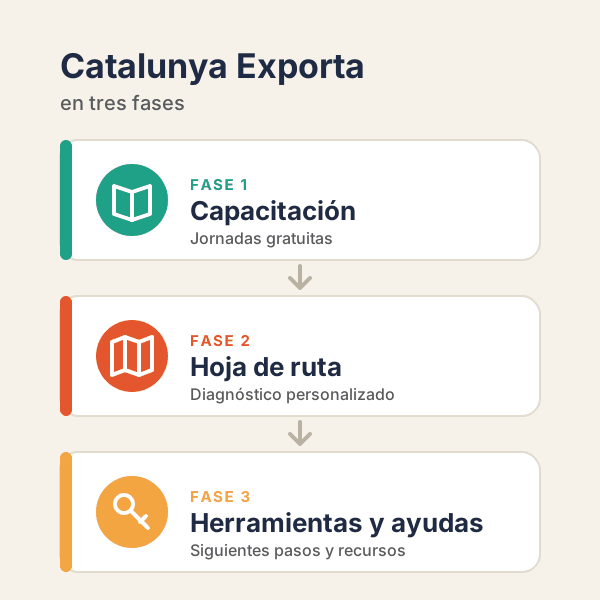
One of the key distinguishing features of this collaboration between Barcelona Export and Foment del Treball as part of the Catalunya Exporta programme is that group training is complemented by an export assessment and a personalised roadmap for each company, provided entirely free of charge.

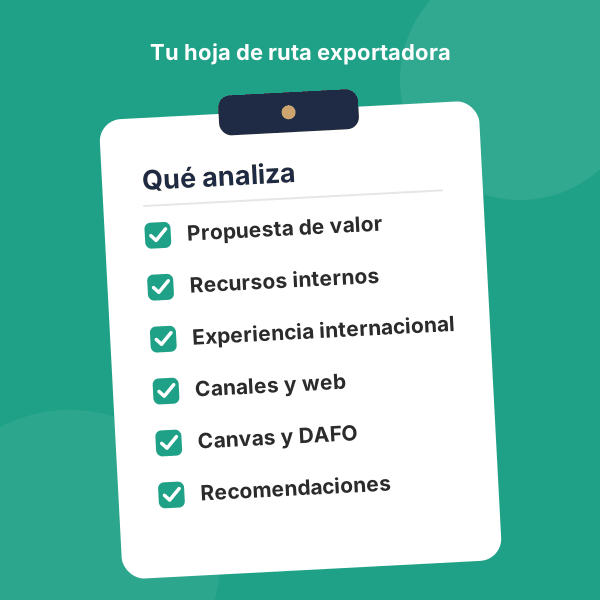
This means that, as well as taking part in the group sessions, each company can request an individualised analysis of its situation: the export potential of its products, the markets best suited to its profile, the optimal entry channel, the necessary resources and a concrete action plan with specific steps, responsible parties and deadlines. A real roadmap, not a generic document.

In practice, this personalised assessment is the starting point for many companies to take the decisive leap: moving from training to actual export activity with a clear strategy and the support of a team of experts.


How to register for and follow the Catalunya Exporta programme

Taking part in the training sessions run by Barcelona Export on behalf of Foment del Treball as part of the Catalunya Exporta programme is straightforward. The sessions are free for companies participating in the programme and are open to Catalan SMEs wishing to start exporting or to enhance their knowledge of international trade.

To view the up-to-date schedule of sessions, the topics covered and to register, you can go directly to the Foment del Treball webpage dedicated to the programme:

👉 View the schedule and register for the Catalunya Exporta sessions

Catalunya Exporta sessions are announced well in advance so that you can plan your schedule. Please note that places on each session are limited and demand is high: register early to secure your place.


sesiones de capacitación catalunya exporta

The journey into exporting begins with an hour well spent

Exporting is not something you learn overnight: it is a continuous learning process that combines theoretical knowledge, practical experience and, above all, expert guidance at key moments. The training sessions that Barcelona Export designs and delivers for Foment del Treball as part of ACCIÓ’s Catalunya Exporta programme are structured precisely with this in mind: one hour every two weeks, for three years, to ensure that Catalan SMEs have the knowledge and tools they need to export successfully.

Catalonia is Spain’s leading exporting region. Yet there are still many SMEs with international potential that have not yet taken the plunge. This programme exists to make that step easier, safer and more successful.

Would you like to find out more about the sessions or request your free, personalised export assessment as part of the Catalunya Exporta programme? Contact us directly at Barcelona Export or register via Foment del Treball.

Opportunities in Industrial Subcontracting in Belgium

Opportunities in Industrial Subcontracting in Belgium

Explore the opportunities offered by industrial subcontracting in Belgium. Discover the possibilities available from the heart of the European Union.

Although Belgium is a relatively small country in terms of size, it plays a key role in the European industrial landscape. Its location at the heart of the European Union, its outstanding logistics infrastructure, and its high level of industrial specialization make it an attractive destination for companies seeking opportunities in industrial subcontracting in Belgium.

With a transport network that connects directly to France, Germany, the Netherlands, and the United Kingdom, Belgium serves as a true logistics and production hub for Western Europe. In addition, it offers an open, innovation-driven business environment, supported by pro-industry policies and a highly diversified network of SMEs and large corporations.


1. A Market That Values Quality and Reliability

Belgium’s industrial sector is characterized by its high technical standards and its commitment to building long-term relationships with business partners. Belgian companies expect their suppliers to meet demanding requirements in terms of quality, precision, and traceability. Therefore, companies seeking to enter Industrial Subcontracting in Belgium market should be able to demonstrate:

  • Integrated production processes: machining, welding, laser cutting, assembly, and painting under one roof.
  • Flexible production capacity capable of adapting to custom orders and tight deadlines.
  • International certifications such as ISO 9001, EN 1090, IATF 16949, or equivalent standards.
  • Full control over delivery times and costs, a particularly valued aspect in just-in-time manufacturing environments.

In Belgium, reliability and responsiveness are just as important as price. An industrial subcontracting supplier that consistently delivers on its commitments has a much greater chance of establishing a strong and lasting presence in this market.


Subcontratación industrial en Bélgica 1 Subcontractació industrial a Bèlgica 1 Industrial outsourcing in Belgium1 Sous-traitance industrielle en Belgique 1

2. Trends Driving Industrial Subcontracting in Belgium

Industrial Subcontracting in Belgium is undergoing a period of transformation driven by digitalization, sustainability, and the search for more efficient solutions. Among the key trends increasing demand for industrial subcontracting are:

  • Shortage of skilled labour: many companies cannot internally cover their entire production capacity and therefore rely on external suppliers for key operations.
  • Growth in automation: customers increasingly seek partners with advanced robotics and robust quality control systems to improve competitiveness.
  • Outsourcing of non-core activities: allowing companies to focus on design, innovation, and marketing while leaving manufacturing to specialized partners.
  • Commitment to environmental sustainability: there is a growing preference for suppliers that use renewable energy, optimize material usage, and reduce waste.

These trends create significant opportunities for companies capable of providing innovative, efficient, and sustainable manufacturing solutions.


3. Sectors with the Greatest Potential for Industrial Subcontracting in Belgium

Industrial subcontracting in Belgium is present across many sectors of the Belgian economy, but some industries offer particularly strong opportunities for new suppliers:

  1. Aerospace and Defence
    Belgium is home to leading aerospace companies and research centres. Demand focuses on high-precision components, lightweight metal structures, and complex assemblies.
  2. Automotive and Electric Mobility
    The Belgian automotive industry, together with its network of component manufacturers, is evolving towards sustainable mobility. Opportunities exist in the production of parts for electric vehicles, batteries, and auxiliary systems.
  3. Renewable Energy
    Both the wind and solar energy sectors require metal structures, support systems, and components for energy generation and storage projects.
  4. Pharmaceutical and Cosmetics Industry
    Belgium is one of the world’s leading pharmaceutical exporters. There is strong demand for packaging machinery, production lines, handling systems, and precision-engineered components.
  5. Metalworking and Industrial Boiler Manufacturing
    This is a cross-sector industry serving multiple markets. Demand includes custom-built structures, pressure vessels, and turnkey industrial solutions.

4. Strategies for Entering the Industrial Subcontracting in Belgium

Successfully entering the industrial subcontracting in Belgium requires a well-defined strategy that combines marketing, physical presence at industry events, and a clear value proposition. Some key recommendations include:

  • Adapt your communication: having a catalogue and website available in French, Dutch, and English is essential for building trust.
  • Participate in trade fairs and B2B events: exhibitions such as Subcontracting in Charleroi and Machineering in Brussels provide excellent opportunities to establish direct business contacts.
  • Respond quickly to quotation requests: responsiveness is highly valued, particularly for urgent or short-term projects.
  • Demonstrate customization capabilities: tailor-made projects are common in Belgium, and logistical flexibility can be a significant competitive advantage.
  • Work with local agents or business developers: having a representative with in-depth market knowledge can greatly facilitate initial operations and accelerate commercial development.

Subcontratación industrial en Bélgica 2 Subcontractació industrial a Bèlgica 2 Industrial outsourcing in Belgium 2 Sous-traitance industrielle en Belgique 2

5. Advantages of Building Commercial Relationships in Belgium

Working with Belgian customers not only opens the door to the local market but also provides access to the wider Western European region. Key advantages include:

  • Strategic location: Belgium offers rapid access to France, the Netherlands, Germany, and the United Kingdom.
  • Political and economic stability: the country benefits from a solid legal framework and a business-friendly international trade environment.
  • High purchasing power: reducing pressure to compete solely on price.
  • Collaborative business culture: many Belgian companies seek long-term strategic partnerships rather than one-off commercial relationships.

Conclusion

The market may be small in geographical size, but it offers substantial opportunities for industrial subcontracting in Belgium, for companies capable of delivering quality, flexibility, and reliability. Its advanced technical environment, strategic location, and openness to international collaboration make it an ideal destination for companies looking to expand across Western Europe.

Businesses that position themselves as strategic partners—rather than simply suppliers—will enjoy a clear competitive advantage in gaining market share and building strong, long-lasting relationships within one of Europe’s leading industrial hubs.

Industrial subcontracting in Belgium represents a high-value opportunity for companies offering quality, reliability, and strong technical capabilities. Contact Barcelona Export to explore how we can help you successfully enter this attractive market.

CDTI Grants 2026: Funding for Innovation and How Barcelona Export Can Help You Secure It

The CDTI grants 2026—managed by the Centre for the Development of Technology and Innovation, an agency under the Spanish Ministry of Science, Innovation and Universities—will mobilise more than €1.8 billion in 2026 to support the entire business innovation cycle.

If your company develops technology, innovates in processes, or works on new product development, you may be overlooking one of Spain’s most powerful sources of public funding.

The challenge is that accessing these grants without expert support involves a steep learning curve.

At Barcelona Export, we have spent years helping companies structure, write and manage their R&D&I projects. In this article, we explain what the CDTI grants 2026 are, which funding calls will be available in 2026 and, above all, why having an experienced project manager can make the difference between securing funding and missing out.


What are the CDTI grants 2026?

The Centre for the Development of Technology and Innovation (CDTI) is Spain’s leading public body for business innovation funding.

Its mission is to promote research, technological development and innovation among Spanish companies through two main types of financial instruments:

  • Partially repayable funding: subsidised loans linked to the EURIBOR interest rate, with long grace periods and repayment terms. Although these are not direct grants, their conditions—up to 10 years for repayment with a 3-year grace period—make them highly attractive.
  • Competitive non-repayable grants: through programmes such as NEOTEC, Science and Innovation Missions and the EIC Seal of Excellence, CDTI offers non-repayable funding ranging from 35% to 100% of eligible project costs.

In short, CDTI grants 2026 projects that significantly advance the technological state of the art, including new products, new manufacturing processes, new services, or the integration and adaptation of technological innovations that create a genuine competitive advantage.


Ayudas CDTI 2026-2 Ajudes CDTI 2026-2 CDTI grants 2026-2 Aides CDTI 2026-2

Main CDTI grants 2026

CDTI plans to mobilise more than €1.8 billion in 2026, combining competitive grants, partially repayable funding and public-private co-investment schemes, with a strong focus on collaborative R&D, strategic challenges and internationalisation.

These are the most relevant CDTI grants 2026:

R&D Projects (PID) — Permanent Open Call

This is the most widely used funding line for SMEs and large companies. It supports projects lasting between 6 and 24 months, with repayable funding of up to 75% and a non-repayable component of 5%. The interest rate is linked to EURIBOR, with a 10-year repayment period and a 3-year grace period. For many companies, this is the main gateway into the CDTI ecosystem.

Direct Innovation Line (LDI) — Permanent Open Call

The Direct Innovation Line is specifically designed for innovation projects that are smaller in scale and complexity than traditional R&D projects. It enables SMEs to access funding for technology developments that are closer to market deployment. It is ideal for companies that innovate but are not yet ready to undertake full-scale R&D activities.

Science and Innovation Missions 2026 — €60 Million in Grants

The CDTI Missions programme has become one of Spain’s leading instruments for funding large-scale R&D projects with a clear strategic focus. It supports collaborative initiatives designed to address predefined national challenges in areas such as ecological transition, digitalisation, healthcare and security. Funding is targeted at business consortia made up of several independent companies, with mandatory SME participation and business leadership in all cases.

NEOTEC — For Technology Start-ups

NEOTEC is aimed at funding technology-based start-ups and small companies in Spain. Its objective is to support innovative projects based on proprietary technology and knowledge. NEOTEC grants can cover up to 100% of eligible costs through non-repayable funding.

International Cooperation: Eurostars and Horizon Europe

CDTI will allocate €32 million to international technological cooperation initiatives, strengthening the participation of Spanish companies in international R&D consortia through programmes such as Eurostars-3 and Horizon Europe.


The biggest challenge of CDTI grants 2026: technical proposals and reporting

This is where many companies struggle. CDTI grants 2026 are not automatically awarded. Applicants must submit a rigorous technical proposal demonstrating the project’s innovative nature, economic viability and expected impact.

Once funding has been approved, project monitoring and cost justification requirements are equally demanding.

The most common mistakes leading to rejected applications include:

  • Poorly substantiated technical proposals: failure to clearly demonstrate the state of the art and the project’s technological advancement.
  • Poorly structured budgets: inclusion of ineligible costs, incorrect allocation of personnel expenses or inaccurate overhead calculations.
  • Lack of consistency between the technical and financial proposals: the project narrative and budget do not align.
  • Reporting issues: inaccurate timesheets, incorrectly allocated invoices or missing supporting documentation.

These mistakes can not only result in an initial rejection but may also lead to the recovery of previously awarded funds during the reporting phase, with significant financial and reputational consequences.


Ayudas CDTI 2026-3 Ajudes CDTI 2026-3 CDTI grants 2026-3 Aides CDTI 2026-3

How Barcelona Export manages your CDTI grants 2026 from start to finish

At Barcelona Export, we provide a comprehensive R&D&I project management service for CDTI grants 2026, covering the entire project lifecycle—from the initial assessment to final reporting.

1. Eligibility assessment and preliminary diagnosis

Before drafting a single line of the proposal, we assess whether your project meets the criteria for CDTI funding and identify the most suitable programme. Many companies spend weeks preparing applications for calls that are not the best fit for their projects.

2. Technical proposal writing

The technical proposal is the core of the application. Our team prepares it using a rigorous methodology, including:

  • State-of-the-art analysis
  • Definition of technological advancement
  • Work plan with milestones and deliverables
  • Risk assessment
  • Results exploitation plan

A well-structured proposal not only increases approval chances but also simplifies future reporting requirements.

3. Financial proposal structuring

CDTI grants 2026 have specific eligibility rules. We define and optimise eligible cost categories—including internal staff, subcontracting, consumables, depreciation and indirect costs—to maximise the project’s eligible budget within regulatory limits.

4. Project monitoring and control

Once the project has been approved, we take operational responsibility for project management:

  • Milestone tracking
  • Systematic recording of staff hours
  • Monitoring actual versus budgeted expenditure
  • Regular communication with the assigned CDTI project officer

5. Full reporting and justification management

Reporting is just as critical as the application itself. We prepare all supporting documentation, including:

  • Technical progress reports
  • Cost certifications
  • Timesheets
  • Invoices and subcontracting agreements

We also coordinate project audits whenever required.


Why choose Barcelona Export for your CDTI grants 2026?

Managing a CDTI grants 2026 internally without prior experience often requires hundreds of hours from highly qualified staff, diverting them from their core innovation activities.

Working with a specialised external partner such as Barcelona Export provides:

  • Lower rejection risk thanks to robust technical and financial proposals.
  • Peace of mind during reporting, as we know exactly which documents CDTI requires and how to present them.
  • Real time savings for your technical team, allowing them to focus on innovation instead of administrative tasks.
  • A strategic perspective, helping you plan not only your current project but also your medium-term R&D&I funding roadmap.

CDTI grants 2026 are among the most powerful innovation funding instruments available in Spain.

With more than €1.8 billion allocated in 2026, there are opportunities for almost any company genuinely committed to innovation.

The question is not whether your company qualifies for these grants, but whether you have the right support to secure them.

Do you have an R&D&I project in mind? Contact Barcelona Export and within 48 hours we will tell you whether your project fits CDTI funding criteria and which programme is best suited to your needs.


Barcelona Export supports companies in the application, management and reporting of public innovation grants, including CDTI programmes, Horizon Europe and regional R&D&I funding schemes.

Export for the first time: Where to start if your SME wants to sell outside the local market?

In this article, we give you an honest guide to the first steps to export for the first time, and explain how you can train yourself—free of charge—to do it with the highest guarantees of success.

You have a good product, satisfied customers in Spain, and a persistent feeling that there is demand abroad. But every time you consider exporting for the first time, the same question holds you back: where do I start?

If you recognise yourself in this situation, you are not alone. It is the starting point for most Catalan SMEs taking their first international steps, and it is also exactly the starting point of the Catalunya Exporta training sessions by ACCIÓ, designed and delivered by Barcelona Export in collaboration with Foment del Treball Nacional.


The most common mistake when exporting for the first time: jumping in without looking

Many SMEs that try to export for the first time make the same mistake: they start at the end. They receive an enquiry from a foreign client, or someone mentions an opportunity in a specific market, and they jump straight into negotiations without any prior preparation. The result is almost always the same: a failed deal, a poorly chosen distributor, or a market that wasn’t suitable for the product.

Successfully exporting for the first time is not a matter of luck, but of preparation. And that preparation begins long before contacting your first international client.


The 5 first steps to export for the first time

1. Assess your product’s export potential

The first step is not choosing a market: it is honestly assessing whether your product is ready to compete abroad. Does it comply with destination market regulations? Is the export price competitive once logistics costs and channel margins are included? Does it require adjustments in packaging, labelling or ingredients?

Many SMEs discover at this stage that adjustments are needed before going abroad. It is far better to identify this now than after signing a contract.

2. Choose the market based on criteria, not intuition

The ideal export market is not the one you’ve heard most about, nor the one someone recommended at a trade fair. It is the one that best combines three factors: real demand for your product, accessibility (logistics, regulation, entry barriers), and manageable competition.

Tools such as the ITC Market Access Map, ACCIÓ market reports, or foreign trade databases allow you to make this decision based on real data. In the training sessions of the Catalunya Exporta programme, we dedicate specific time to teaching how to use these tools in practice.

3. Understand the rules of the game: documentation, tariffs and regulation

Exporting for the first time means becoming familiar with a documentary framework that can seem overwhelming at the beginning: commercial invoice, packing list, certificate of origin, export customs declaration, Incoterms… The good news is that once you understand the logic of the system, it becomes manageable. The bad news is that a documentation error can cost you the deal or lead to customs penalties.

4. Decide how you will enter the market: the distribution channel

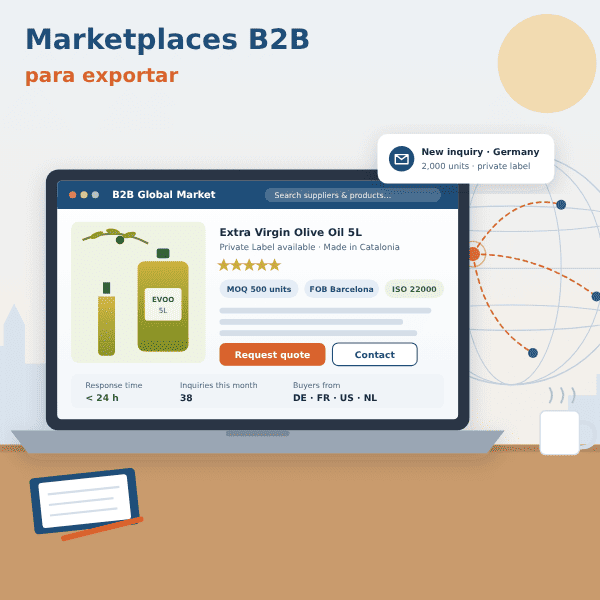
Will you sell directly to the end customer? Through a commercial agent? With an exclusive distributor? On a B2B marketplace? This decision—the distribution channel—is one of the most strategic in the export process and has a major impact on results.

Each option has advantages and drawbacks in terms of control, margin, speed of market entry and risk. The right choice depends on the product, the market and the company’s resources. There is no universal answer.

5. Set export pricing correctly

Export pricing is not your domestic selling price plus a percentage. It has its own logic, including production costs, international logistics costs (insurance, transport, customs), distributor or agent margins, local taxes in the destination market, and your desired market positioning.

Incorrect pricing is one of the most costly mistakes an SME can make when trying to export for the first time. In too many cases, it results in selling abroad with lower margins than in the domestic market, making the export activity unsustainable in the long term.


Exportar por primera vez 1 Exportar per primera vegada 1 Export for the first time 1 Exporter pour la première fois 1

Catalunya Exporta training sessions: free training to export for the first time

All these topics—and many more—are exactly what is covered in the training sessions of the Catalunya Exporta programme designed and delivered by Barcelona Export in collaboration with Foment del Treball Nacional.

These sessions are designed to share basic but solid knowledge on the most relevant export topics and provide companies entering internationalisation with practical tools to export successfully. Key features:

  • 100% virtual format: attend from anywhere without travelling
  • Maximum duration of 60 minutes: focused, practical content
  • Fortnightly schedule: one session every 15 days over the next 3 years
  • Varied and progressive topics: each session covers a key export aspect
  • Completely free for SMEs participating in the Catalunya Exporta programme

The session calendar covers a wide range of topics: from the first steps to export for the first time to negotiating with international distributors, export financing, product adaptation, international payment methods, and customs management. A complete training journey delivered in short fortnightly modules, fully compatible with any company’s daily operations.


The personalised diagnosis: your free roadmap

Beyond the group sessions, the programme includes a free personalised export diagnosis for each participating company. The result is a concrete roadmap: to export for the first time, it is essential to know which markets to explore, which entry channel is most appropriate, what product adaptations are needed, and what steps to take over the next 90 days.

It is not a generic report: it is a tailor-made analysis of your company, product and resources, prepared by the team at Barcelona Export.


Exportar por primera vez 2 Exportar per primera vegada 2 Export for the first time 2 Exporter pour la première fois 2

The first step is the most important

Exporting for the first time may seem complex, but with proper preparation and the right support it is entirely achievable for an SME with a competitive product and a willingness to learn. The Catalunya Exporta training sessions are precisely that structured first step many companies need to move from intention to action.

Check the session calendar and register directly on the Foment del Treball website:

👉 View sessions and join the Catalunya Exporta programme

Do you want the personalised diagnosis or have questions about whether your company is ready to export? Contact Barcelona Export and we will reply within 48 hours.

Catalunya Exporta programme: the ACCIÓ programme helping Catalan SMEs start exporting

Discover the Catalunya Exporta programme by ACCIÓ: grants of up to €10,500, training and expert guidance to help your Catalan SME start exporting in 2026.

If you run an SME in Catalonia and have been thinking about selling outside Spain, here’s some news worth your attention: the Catalunya Exporta programme by ACCIÓ, the Agència per la Competitivitat de l’Empresa, is the most powerful public initiative currently available to help Catalan businesses make the leap into international markets. At Barcelona Export we explain everything you need to know to make the most of this opportunity.


¿What is the Catalunya Exporta programme?

The Catalunya Exporta programme is a public-private initiative driven by the Government of the Generalitat de Catalunya through ACCIÓ. It runs for three years (2026–2028), has a budget of over €3 million and an ambitious goal: to help 2,000 Catalan companies start exporting for the first time or consolidate their presence in foreign markets. It forms part of the Catalan Economy Internationalisation Strategy 2026–2030, which aims to reach 19,000 regular exporting companies across Catalonia.

The Catalunya Exporta programme does not work alone. It is developed jointly by ACCIÓ and a network of leading business organisations: the Consell General de Cambres de Catalunya, Foment del Treball Nacional, PIMEC, Secartys, TecnoCampus, Amec, the Fundació Cecot Innovació, Texfor, FITEX, the Centre Metal·lúrgic and the AEGP. A coalition that guarantees broad sectoral coverage and genuine on-the-ground support.


What does the Catalunya Exporta programme offer your business?

The Catalunya Exporta programme is not just training: it is a complete roadmap that accompanies the company from the initial diagnosis through to the execution of the export plan. The main pillars are:

1. Specialist training sessions Workshops and sessions on international training, export financing, building an export department, how to find international distributors, adapting your product to foreign markets and much more. Sessions are scheduled every two weeks, allowing businesses to keep pace without disrupting day-to-day operations.

2. Personalised export diagnostic Each company receives an analysis of its real starting point: the product’s export potential, the most suitable markets, the optimal entry channel and the resources required. The outcome is an actionable initial plan with specific tasks, responsibilities and deadlines.

3. Access to ACCIÓ tools and resources Participating companies gain access to ACCIÓ’s full service portfolio: market intelligence and opportunities, support for tariff barriers, resolution of international trade obstacles and, above all, the internationalisation vouchers described below.


Catalunya Export Programme

The ACCIÓ Vouchers: direct funding to start exporting

Within the Catalunya Exporta programme ecosystem, the ACCIÓ Vouchers are the most direct funding instrument available to Catalan SMEs. The 2026 call — now open — offers two options:

  • Vouchers to start exporting: up to €10,500 grant (100% of the budget). Aimed at companies that do not yet export or whose foreign sales do not exceed 25% of turnover.
  • Vouchers for internationalisation plans: up to €8,000 grant (100% of the budget). For companies with some export experience that want to structure and scale their strategy.

In both cases, the voucher is redeemed with an ACCIÓ-accredited Internationalisation advisor — such as BarcelonaExport — who designs and executes the internationalisation project alongside the company.

Basic requirements to access the vouchers:

  • Be an SME with operational headquarters in Catalonia
  • Have invoiced a minimum of €250,000 in the previous financial year
  • Have a website in at least one foreign language
  • Be up to date with tax and Social Security obligations

One important point: vouchers are awarded in strict chronological order of application and tend to run out within a few weeks of the call opening. In 2026 the call opened on 14 May. If you are reading this now, don’t leave it until tomorrow.


Why trust an accredited adviser like Isabel Garcia at BarcelonaExport?

Working with an ACCIÓ-accredited Internationalisation adviser makes a real difference. Not only because the voucher itself requires it, but because the export process — finding distributors, negotiating contracts, adapting to local regulations — has a steep learning curve that can prove very costly without expert guidance.

At BarcelonaExport we have spent years supporting Catalan SMEs in their internationalisation journey: from market selection through to signing the first contract with an international distributor. Within the Catalunya Exporta programme, we can help you apply for the vouchers, design your export plan and execute every step with a proven methodology.


The time to export is now

Catalonia is Spain’s leading exporting region, with over €74 billion in exports and a presence in more than 180 markets. Yet 42% of those exports are concentrated in large companies. The Catalunya Exporta programme exists precisely so that SMEs — the true engine of the Catalan economy — can also benefit from international growth.

If your company has a strong product, productive capacity and a vision for the future, the Catalunya Exporta programme by ACCIÓ could be the catalyst you have been waiting for. The question is not whether you should export, but when you start.

Want to know whether your company can access the Catalunya Exporta programme and the 2026 ACCIÓ Vouchers? Get in touch and we will provide a free diagnostic within 48 hours.


Artificial Intelligence and Big Data in the French Market

-inteligencia artificial -intel.ligència artificial -intelligence artificielle -artificial intelligence

Opportunities for Technology Companies Offering Artificial Intelligence and Data Analytics Solutions

Artificial Intelligence (AI) and Big Data are revolutionizing multiple industries around the world. In the context of the French market, the synergy between these two technologies offers high-value business opportunities for technology companies that develop and commercialize AI and data analytics solutions. France has long been a benchmark for technological innovation in Europe, and its market is rapidly evolving toward the adoption of these advanced tools. In this article, we explore how Artificial Intelligence and Big Data are shaping the future of the French market, as well as the main opportunities these technologies offer to tech companies.


The importance of Artificial Intelligence and Big Data

Artificial Intelligence refers to the ability of machines to perform tasks that normally require human intelligence, such as pattern recognition, decision-making, and learning. Big Data, on the other hand, refers to the collection, storage, and analysis of large volumes of data from various sources. Both technologies are closely interconnected, as AI systems rely on data analysis to make informed decisions and improve performance.

France is in a strategic position to become a leader in the adoption of these technologies. The country has invested significantly in Artificial Intelligence and Big Data in recent years through public policies and the promotion of research and development initiatives. With support from both the government and the private sector, growth opportunities in this sector are abundant.


-inteligencia artificial 1
-intel.ligència artificial 1
-intelligence artificielle    1
-artificial intelligence 1

The French market: a favorable environment for AI and Big Data

France has embraced Artificial Intelligence and Big Data to position itself as a technological benchmark in Europe. In 2018, President Emmanuel Macron presented a national AI strategy aimed at positioning France as a leader in research and development in this field. This plan includes measures to foster collaboration between the public and private sectors, as well as the creation of new tech startups focused on developing innovative AI solutions.

In addition, France has a highly active innovation ecosystem supported by major research centers, renowned universities, and large technology corporations such as Dassault Systèmes, Atos, and Thales. This environment fosters the development of advanced solutions based on Big Data and AI, positioning the country as fertile ground for technology companies seeking to enter or expand in the market.


Opportunities for technology companies

The French market offers numerous opportunities for companies developing AI and Big Data solutions. Below are some of the main areas of opportunity:

1. Digital transformation of businesses

Digital transformation is a priority for many French companies, especially in sectors such as banking, healthcare, automotive, and manufacturing. Companies are looking to adopt AI and Big Data technologies to optimize operations, improve decision-making, and personalize products and services.

Technology companies offering AI solutions that enable process automation, predictive analytics, or customer experience personalization have strong opportunities in this area. In addition, big data analysis can help French companies anticipate market trends, identify new business opportunities, and optimize supply chains.

2. Artificial Intelligence in the healthcare sector

The healthcare sector in France is one of the most active adopters of Artificial Intelligence and Big Data. The combination of both technologies improves medical care through disease prediction, personalized treatments, and the analysis of large clinical datasets to identify disease patterns.

Technology companies developing AI-based solutions such as machine-assisted diagnostic systems or clinical data analytics platforms have a wide range of opportunities in this market. In addition, the use of Big Data in biomedical research and public health management is an area where companies can deliver high-value solutions.

3. Automotive industry and autonomous vehicles

France has one of the most developed automotive industries in Europe, with companies such as Renault and PSA (Peugeot-Citroën) at the forefront. The adoption of Artificial Intelligence and Big Data is transforming the sector, particularly in areas such as autonomous driving, manufacturing optimization, and customer experience enhancement.

Companies developing AI solutions for autonomous driving, such as computer vision systems or decision-making algorithms, can find significant opportunities in this market. In addition, data analytics plays a key role in improving manufacturing processes and predicting customer behavior.

4. Retail and e-commerce

The retail and e-commerce sector in France is booming, especially after the pandemic. Companies in this sector are adopting AI and Big Data to enhance the shopping experience, personalize offers, and optimize logistics.

Technology companies developing AI solutions for product recommendation, demand forecasting, or inventory management have strong opportunities in this market. Data analysis also enables better customer segmentation and more effective marketing campaigns.

5. Smart cities and sustainability

France has implemented policies to promote sustainability and the development of smart cities, where technology plays a crucial role in resource management, urban mobility, and energy efficiency. The combination of Artificial Intelligence and Big Data is essential for building these smart cities.

Technology companies developing AI solutions for traffic management, energy optimization, or public service improvement have a wide field for innovation. In addition, data-driven solutions can contribute to environmental sustainability, an increasingly important topic in France’s political and social agenda.


-inteligencia artificial 2
-intel.ligència artificial 2
-intelligence artificielle    2
-artificial intelligence 2

Challenges and considerations regarding AI and Big Data

Although the opportunities in the French market are numerous, there are also challenges for technology companies entering this sector. One of the main challenges is competition in a highly sophisticated market, with both local and international players competing for leadership in AI and Big Data solutions.

Another important challenge is compliance with European data protection regulations, such as the General Data Protection Regulation (GDPR). Companies must ensure compliance with these rules to avoid penalties and gain customer trust.


Conclusion

Artificial Intelligence and Big Data represent a major opportunity for technology companies in the French market. With a favorable environment for innovation and development of these technologies, companies offering AI and data analytics solutions have a wide range of opportunities across sectors such as healthcare, automotive, retail, smart cities, and sustainability. However, it is essential for companies to adapt to local regulations and be prepared to compete in an increasingly dynamic and competitive market.

If you would like to explore the business opportunities that the French market can offer to your Artificial Intelligence or Big Data technology company, do not hesitate to contact us. We will be delighted to support you on this new journey.

Exporting new Construction materials to France

The construction industry has historically been one of the fundamental pillars of global economies. Over the past decade, however, it has undergone a significant transformation driven by the need to adapt to new environmental requirements and energy efficiency standards. In this context, new construction materials play a key role in the evolution of the industry.

France, one of Europe’s leading construction markets, is creating new opportunities for the export of innovative, sustainable, and high-performance new construction materials.

This article explores the opportunities and trends surrounding new construction materials in France, highlighting the country’s focus on sustainability, energy efficiency, and technological innovation that is reshaping the sector.


1. The French Construction Market: A Favourable Environment for Innovation in new construction materials

France is one of Europe’s most advanced countries in terms of architecture and construction, with a market that has consistently remained at the forefront of the latest trends and technologies. Its construction industry is highly dynamic and diverse, covering residential, commercial, and industrial developments.

The transition towards more sustainable construction has gained considerable momentum in recent years, with government policies promoting environmentally responsible practices and greater energy efficiency across all construction projects.

For example, France’s Energy and Climate Law establishes clear objectives to reduce the carbon footprint of buildings and improve the energy efficiency of both new and existing properties.

In this context, new construction materials offering more sustainable and efficient solutions are becoming a key market opportunity for companies looking to export innovative products to France.


nuevos materiales para la construcción 1 
nous materials per a la construcció 1 
new construction materials 1 
nouveaux matériaux de construction 1

2. New Construction Materials: Innovation for Sustainability

Sustainability has become the dominant trend in the construction industry. As demand for environmentally friendly buildings continues to grow, so does the need for innovative materials that minimise environmental impact.

a) Recycled and Recyclable Materials

One of the most promising areas of sustainable construction is the use of recycled and recyclable materials. France has adopted policies that encourage the circular economy, creating significant opportunities for companies producing construction materials from recycled waste.

Examples include recycled concrete, recycled steel, and sustainably sourced timber.

Recycled concrete, for instance, is increasingly used for pavements, walls, and structural applications, helping reduce construction waste and the extraction of natural resources.

b) Eco-Friendly Insulation Materials

Insulation is essential for improving the energy efficiency of buildings.

In France, innovative insulation materials are increasingly focused on combining excellent thermal performance with environmental sustainability. Sheep’s wool, cork, cellulose, and insulation panels made from recycled materials are becoming increasingly popular due to their insulating properties and low environmental impact.

Demand for these products is being driven by government regulations requiring greater energy efficiency and lower CO₂ emissions in buildings.

c) Low-Carbon Concrete

Concrete is one of the most widely used construction materials but also one of the largest contributors to CO₂ emissions during production.

To address this challenge, innovations such as low-carbon concrete have emerged, incorporating additives like fly ash, blast furnace slag, and other industrial by-products to reduce environmental impact.

Recycled concrete and bioconcrete—which contains microorganisms capable of self-healing cracks—are also gaining traction in the French market and present significant export opportunities.


3. Energy Efficiency: Growing Demand for Low-Energy Building Materials

Energy efficiency has become another cornerstone of modern construction.

New construction materials are being designed to meet increasingly demanding energy performance standards, enabling buildings to maintain comfortable temperatures throughout the year while reducing reliance on heating and air conditioning systems.

a) Smart Glass

Smart glass is one of the most exciting innovations in the construction industry, particularly for buildings designed to meet the highest energy efficiency standards.

This technology can regulate the amount of sunlight and heat entering a building, significantly reducing energy consumption for climate control.

Electrochromic glass, for example, automatically darkens or lightens depending on temperature or light intensity, providing highly effective thermal management.

France is increasingly incorporating these technologies into premium construction projects, creating growing opportunities for exporters of innovative materials.

b) Reflective Paints and Thermal Control Technologies

Another example of innovative and new construction materials that improve energy efficiency is the use of reflective paints and thermal coatings.

These solutions reduce heat transfer into buildings, lowering heating and cooling requirements and improving overall energy performance.

They are particularly valuable for commercial and high-rise residential developments in France’s major urban centres.


nuevos materiales para la construcción 2 nous materials per a la construcció 2 new construction materials 2 nouveaux matériaux de construction 2

4. Export Opportunities for Innovative and New Construction Materials in France

As one of Europe’s largest construction markets, France offers outstanding opportunities for companies wishing to export innovative and new construction materials.

The growing demand for sustainable and energy-efficient solutions—driven by both government regulations and market expectations—has created an ideal environment for innovation.

Companies specialising in recycled materials, eco-friendly insulation, low-carbon concrete, and other sustainable construction solutions have strong prospects for success in the French market.

Furthermore, establishing strategic partnerships with architects, engineering firms, and local construction companies can greatly facilitate market entry and product adoption across France.


5. Conclusion

Exporting new construction materials to France offers an excellent opportunity for companies looking to expand into one of the world’s most innovative and demanding markets.

Sustainability and energy efficiency are the defining trends shaping the French construction sector, creating opportunities for a wide range of innovative materials capable of reducing carbon emissions and improving building performance.

By focusing on innovation, quality, and sustainability, companies exporting new construction materials to France can position themselves as leaders in the future global construction market.

Our consultancy specialises in the construction industry and French-speaking markets and can help you identify distributors or direct clients in the French construction sector. We would be delighted to support your international expansion.

Renewable Energy Solutions for the French market

Opportunities for Companies Looking to Introduce Solar, Wind, or Biomass Renewable Energy Solutions

In recent years, the transition to renewable energy has gained unprecedented importance worldwide, and France is no exception. With a firm commitment to reducing greenhouse gas emissions and decreasing its dependence on fossil fuels, the country has significantly increased its investment in clean energy technologies. This shift represents a strategic opportunity for companies seeking to introduce solar, wind, or biomass energy solutions into the French market. In this article, we explore the renewable energy technologies gaining momentum in France, the opportunities they offer businesses, and how companies can take advantage of this expanding market.

The Context of France’s Energy Transition Towards Renewable Energy

France has established a clear roadmap for its energy transition, driven by the Climate Plan and the Energy Transition for Green Growth Act (LTECV), approved in 2015. This legislation aims to reduce the country’s carbon footprint, achieve a 40% reduction in greenhouse gas emissions by 2030, and reach carbon neutrality by 2050. To achieve these objectives, numerous technological solutions promoting renewable energy sources such as solar, wind, and biomass are being actively supported.

Furthermore, France benefits from a strong research and development infrastructure in renewable energy, backed by public policies that encourage innovation in the sector. Through subsidies, tax incentives, and financing mechanisms, the French government has created a favourable environment for investment in clean energy, making the market particularly attractive for international companies looking to participate in the sector’s growth.


Solar Energy: A Growing Opportunity in the French Market

Solar energy is one of the most promising renewable energy sources in France. According to data from the International Renewable Energy Agency (IRENA), the country’s installed solar capacity continues to grow rapidly, particularly in the southern regions, where solar radiation levels are especially high.

Business Opportunities

1. Residential and Commercial Solar Panel Installation

With the increasing demand for energy self-consumption, particularly in single-family homes and commercial buildings, the solar panel installation market is experiencing significant growth. Companies can provide photovoltaic systems tailored to each customer’s needs, offering customised solutions that optimise energy consumption.

2. Large-Scale Solar Projects

France is also investing heavily in utility-scale solar energy projects. Companies offering solutions for the construction and operation of solar farms, particularly on non-agricultural land or industrial sites, have substantial business opportunities. Investments in these projects are supported by government incentives and competitive tendering processes.

3. Energy Storage Innovation

One of the key challenges facing solar energy is the intermittent nature of electricity generation, making efficient energy storage systems essential. Companies developing technologies such as solar batteries or grid-scale energy storage solutions will find a rapidly expanding market in France.

4. Maintenance and Optimisation Services

As the number of solar installations continues to grow, so does the demand for maintenance services. Businesses specialising in the optimisation, cleaning, and maintenance of solar panels can benefit from a profitable and expanding market niche.


Renewable Energy 1

Wind Energy: An Expanding Market

Wind energy is another renewable energy source with significant potential in France. The country has been developing both its onshore and offshore wind infrastructure to achieve its clean energy targets. In fact, France is one of Europe’s countries with the greatest potential for offshore wind development thanks to its extensive coastline.

Business Opportunities

1. Onshore Wind Energy

Although offshore wind is expanding rapidly, onshore wind remains one of France’s main sources of electricity generation. Companies can participate in the construction, operation, and maintenance of wind farms, supported by public policies that encourage the development of green infrastructure. Opportunities also include the optimisation of wind turbines through advanced technologies.

2. Offshore Wind Energy

France is positioning itself as a leader in offshore wind development, particularly in regions such as Normandy and Brittany. Companies providing innovative solutions for offshore wind turbine installation and grid connection technologies will find significant opportunities in this fast-growing market. Investments in offshore renewable energy projects are supported by both national and European funding programmes.

3. Wind Turbine Innovation and Energy Efficiency

Businesses developing new technologies to improve wind turbine efficiency or designing more sustainable and cost-effective models will enjoy significant opportunities in a competitive and rapidly evolving market. France continues to encourage research and development in advanced materials and technologies that enhance wind farm performance.


Renewable Energy 2

Biomass: A Renewable Energy Source with Strong Potential

Biomass is another renewable energy source that is gaining popularity in France, particularly for heat and electricity generation. The country’s rich biodiversity and extensive forest resources make it well suited for the sustainable use of biomass as an energy source.

Business Opportunities

1. Biomass Plant Development

Companies involved in the development and operation of biomass facilities for electricity generation or heating applications can find an attractive market in France, particularly in rural areas and industrial zones with high heating demand.

2. Waste-to-Energy Technologies

The conversion of agricultural, industrial, and forestry waste into biomass energy is a rapidly growing trend. Businesses offering innovative technologies to improve the efficiency of these conversion processes can achieve considerable success in the French market, where sustainability is a strategic priority.

3. Biofuels and Sustainable Solutions

Beyond biomass-based power generation, companies developing biofuel solutions—whether liquid or gaseous—will find a market actively seeking sustainable alternatives for both the transport and industrial sectors.


Conclusion: Renewable Energy Offers a Market Full of Opportunities

The French renewable energy market, particularly in the solar, wind, and biomass sectors, is expanding rapidly and offers numerous opportunities for companies seeking to introduce innovative and sustainable solutions.

With its strong commitment to the energy transition and continued support for investment in clean energy, France represents an attractive destination for businesses looking to expand their operations in Europe. Opportunities range from residential and commercial solar installations to the development of large offshore wind farms and biomass facilities, making the market an ideal environment for growth and innovation.

To fully capitalise on this potential, companies must be prepared to meet the quality and sustainability standards required by the French market. By adapting their products and services to local needs and leveraging the available support mechanisms, businesses can benefit from the growing demand for renewable energy in France while contributing to the country’s energy transition.

If you are interested in exporting your products or services to the French market, do not hesitate to contact us.