
How to Identify the best International Markets for Your Business


Choosing where to sell is just as important as deciding what to sell. Selecting the wrong market consumes time, money and resources without delivering results, while choosing the right one can significantly increase your company’s growth opportunities. In this article, we explain, step by step, how to identify the international markets with the greatest potential to successfully launch or strengthen your export strategy.
Why It Is Essential to Prioritise International Markets Before Exporting
Before expanding into international markets, it is worth answering a few fundamental questions:
- What is your company’s real export potential? (product, pricing, production capacity and available resources)
- Which markets are genuinely accessible and profitable for your product?
- How many markets can you realistically focus on without spreading your resources too thin?
Not all international markets offer the same level of accessibility or profitability. That is why it is essential to evaluate them based on market attractiveness, accessibility and strategic fit with your product. Prioritising international markets allows you to concentrate your efforts where your company has the highest probability of success instead of trying to enter too many countries at once. Today, free digital tools make it possible to move from intuition to data-driven decision-making quickly and reliably.
First Step: Define Your Product and Value Proposition
Before analysing potential countries, your company should have a clear understanding of:
- The problem your product solves.
- Your competitive advantage and whether your product is genuinely innovative.
- Your market positioning (economy, mid-range or premium).
- The type of customer and industry that purchase your product.
Without this initial definition, selecting the most suitable international markets becomes extremely difficult.
Criteria for Identifying the Best International Markets for Your SME
To compare countries objectively, it is advisable to analyse four main groups of criteria:
- Quantitative criteria (market size and growth): import volumes for your product, GDP, annual economic growth and consumption trends over the past five years.
- Market accessibility criteria (entry barriers): tariffs, technical regulations, required certifications, geographical distance and language.
- Competitive criteria: the presence of local and international competitors, pricing levels and market positioning.
- Strategic fit criteria: local consumer habits, market trends and the cultural fit between your product and the target market.
The ideal combination is market size + accessibility + strategic fit + manageable competition. A large market that is difficult to access or highly saturated may offer fewer opportunities than a smaller market that is better suited to your company’s capabilities.
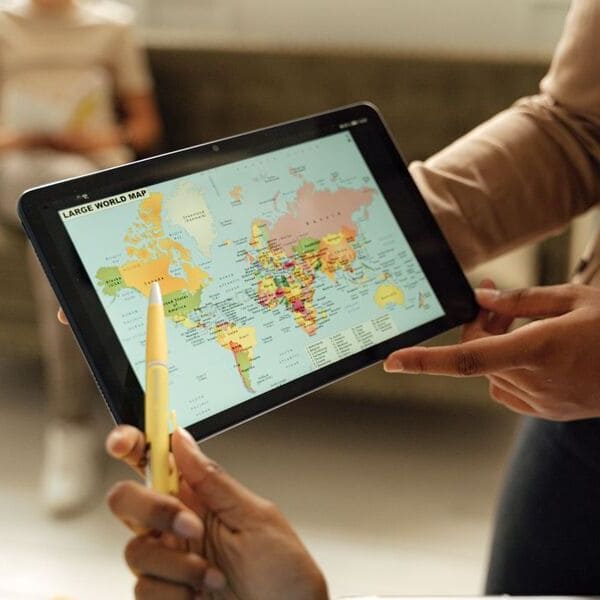
Free Digital Tools for Prioritising International Markets
There are numerous free tools that can help you analyse and compare international markets more efficiently:
- Trade Map (ITC) — https://www.trademap.org: probably the world’s leading international trade database. It provides import and export statistics, identifies the main supplying countries, shows annual growth rates and market shares, and is ideal for comparing 20 to 30 countries in just a few minutes.
- UN Comtrade — https://comtradeplus.un.org: the United Nations’ international trade database, particularly useful for obtaining highly detailed trade statistics.
- Google Market Finder — https://marketfinder.thinkwithgoogle.com: provides insights into product search demand by country, market competitiveness and each market’s level of digital readiness.
- Eurostat — https://ec.europa.eu/eurostat: offers consumption, production and sector-specific statistics, making it particularly valuable for analysing European markets.
- Observatory of Economic Complexity (OEC) — https://oec.world: enables you to identify who buys and sells specific products, discover emerging markets and analyse global trade trends through highly visual data, making it an excellent tool for identifying new export opportunities.
Additional Recommended Sources for Prioritising International Markets
- ICEX (Spain) and ACCIÓ (Catalonia): extensive international office networks providing free market reports, sector analyses and commercial contacts.
- Santander Trade Portal (https://santandertrade.com): country profiles featuring economic indicators, business environment information and trade barriers.
- LinkedIn and industry-specific professional networks: valuable sources for qualitative insights into competitors, trade fairs and potential buyers.
- Alibaba, Amazon and international marketplaces: useful for analysing sales volumes, pricing, customer reviews and active competitors.
- ACCIÓ Export Observatory (Catalonia Trade Portal): sector reports, market intelligence and personalised support for Catalan exporters.
What You Should Analyse When Evaluating International Markets
Market Size
Knowing that a country imports your product is not enough. You should analyse the number of potential customers, the market value, the size of the industry and its expected future growth.
Recommended sources include Statista, Mordor Intelligence, Grand View Research, MarketsandMarkets, as well as sector reports published by ACCIÓ and ICEX.
Competition
The key question is: Who is already selling in this market?
Analyse local manufacturers, importers, leading brands, competing products, price ranges and competitive advantages.
Useful sources include Google, LinkedIn, Kompass, Europages, Alibaba, Made-in-China, Thomasnet and Global Sources.
Market Entry Barriers
Even a large market may be impossible to enter if you fail to evaluate tariffs, product approvals, certifications, regulations, technical requirements, labelling rules, taxation, logistics, language and local business culture.
Ease of Market Access
Not every market operates in the same way. Analyse how easy it is to identify distributors, importers, international trade fairs, digital sales channels, marketplaces and commercial agents.
Country Risk
Key factors to assess include political stability, country risk, financial risk, payment risk, inflation and currency fluctuations.
Recommended sources include Coface, Allianz Trade (formerly Euler Hermes), Crédito y Caución, the World Bank and the OECD.
Compatibility with Your Company
This is one of the most common mistakes exporters make: the largest market is not always the best one.
Ask yourself whether your company has staff who speak the local language, sufficient budget to visit the market regularly, the ability to provide after-sales service, enough production capacity and all the certifications required to compete successfully.

How to Build a Matrix to Prioritise International Markets
- Define the criteria that matter most to your business, such as market size, growth potential, tariffs, competition, cultural fit and logistical accessibility.
- Score each potential market (for example, from 1 to 5 for each criterion) using data from sources such as Trade Map, Access2Markets, Google Market Finder and other reliable databases.
- Assign a weighting to each criterion according to your international strategy. Not all factors carry the same importance; for example, a market with high tariffs may be ruled out even if it is very large.
- Select two or three priority markets and one or two reserve markets, concentrating your initial export efforts where they are most likely to generate results and valuable learning.
A typical weighting model could be: import volume (20%), market growth (15%), competitive intensity (15%), entry barriers (15%), country risk (10%), logistics (10%), ease of doing business (10%) and compatibility with your company (5%).
Applying this scoring system produces an objective ranking that typically identifies three priority markets, one or two secondary markets, and five markets to monitor for future opportunities.
Common Mistakes When Selecting International Markets
- Entering the first market that shows interest without carrying out a proper analysis. An unsolicited enquiry is not, by itself, proof of genuine market potential.
- Choosing the largest market without assessing accessibility. Large markets such as the United States or Germany are not always the best first export destination for an SME.
- Failing to update market data after making your initial selection. International markets evolve continuously, so your market prioritisation should be reviewed every 12 to 18 months.
- Relying on a single source of information. Combine quantitative data (such as Trade Map) with qualitative insights from sources such as ACCIÓ’s international offices, LinkedIn and international trade fairs.
Characteristics of an Attractive Target Market
A well-selected target market typically shares several key characteristics: strong and steadily growing imports of your product, low to moderate supplier concentration, manageable technical and administrative barriers, the presence of specialised distributors or system integrators, price levels that match your market positioning, political and financial stability, reasonable logistics costs, and a degree of cultural affinity or previous export experience that facilitates market entry.
Practical Recommendation for Identifying the Best International Markets
- Quantitative screening: analyse between 30 and 50 countries using data from Trade Map, OEC and Access2Markets.
- Qualitative assessment: shortlist the 10 most promising markets and evaluate their competitive landscape, distribution channels, regulatory requirements and sector trends.
- Strategic prioritisation: select three or four priority markets and develop a dedicated market entry plan for each one.
Identifying the international markets with the greatest opportunities is not a matter of intuition—it requires a structured approach. Define your product clearly, apply objective selection criteria, make use of free digital market intelligence tools, and build a prioritisation matrix that combines both quantitative and qualitative data. This methodology will help you focus your resources on the two or three markets where your company has the highest probability of success.
Would you like a personalised international market analysis for your business? At Barcelona Export, we can help you identify your priority export markets and develop an internationalisation action plan tailored to your company’s specific needs.