
B2B Marketplaces for Exporting


B2B Marketplaces for exporting help SMEs connect with international buyers, discover new business opportunities and test demand in overseas markets without immediately investing in trade fairs, business trips or a local sales office.
For Catalan and other European SMEs looking to enter the international markets, B2B marketplaces can provide access to international importers, wholesalers, distributors, retailers and industrial buyers. However, choosing the right platform is only the first step. To generate qualified enquiries and profitable orders, businesses need effective product listings, competitive pricing, fast responses and a clear understanding of UK import requirements.
In this guide, we explore the different types of B2B marketplaces for exporting, the platforms worth considering by sector, how to create a product listing that attracts buyers, the mistakes to avoid and the export support that may be available.
What Are B2B Marketplaces for Exporting?
B2B marketplaces for exporting are online platforms that help businesses promote and sell their products or services to other companies in international markets. Their users include importers, distributors, wholesalers, retailers, manufacturers and procurement teams.
Not all platforms operate in the same way. They generally fall into four categories:
| Type of platform | How it works | Examples |
|---|---|---|
| General B2B marketplaces | Connect suppliers with buyers across multiple industries and countries. | Alibaba.com, Amazon Business UK, Global Sources, Made-in-China.com |
| Specialist B2B marketplaces | Focus on specific industries, helping suppliers reach more relevant buyers. | DirectIndustry, Archiproducts, Knowde |
| B2B directories | Help businesses showcase their products and generate commercial enquiries rather than necessarily completing transactions online. | Europages, Kompass UK, wlw |
| Wholesale marketplaces | Connect brands with retailers, particularly independent shops looking for new products and suppliers. | Faire, Ankorstore |
Benefits of Using Marketplaces B2B for Exporting
- International visibility: Reach buyers who may not otherwise discover your business.
- Lower initial investment: Test demand in a new market before establishing a local sales presence.
- New commercial contacts: Generate enquiries from importers, distributors and potential business partners.
- Market intelligence: Understand buyer preferences, product demand and competitive positioning.
- Measurable performance: Track enquiries, quotations, orders and margins to assess your return on investment.
Risks to Consider Before Joining a B2B Marketplace for exporting
- Subscriptions and commissions can reduce profitability.
- Price competition may put pressure on margins.
- Platform dependency can expose your business to changes in fees, rules and search rankings.
- Fraud and counterfeiting can affect suppliers operating in international markets.
- UK import requirements may involve customs declarations, VAT and product-specific compliance obligations.
Before joining a platform, verify its commercial terms, the quality of its buyers and its payment procedures. Consider protecting your trademark in the new markets and check the import requirements applicable to your products.
For businesses exporting from the EU to Great Britain, customs formalities may apply. Northern Ireland can be subject to different arrangements.
The Best Marketplaces B2B for Exporting by Industry
The most suitable platform depends on your product category, target buyers and export strategy. The following options are worth exploring when targeting the UK market.
| Industry | Platforms to consider | Potential buyers |
|---|---|---|
| Food, wine and beverages | Faire, Alibaba.com, Tridge, RangeMe | Importers, food wholesalers, independent retailers and specialist distributors |
| Fashion, textiles, footwear and accessories | JOOR, NuORDER, Fibre2Fashion, Faire | Boutiques, retail chains, distributors and private-label buyers |
| Machinery, equipment and components | DirectIndustry, IndustryStock, Europages, Global Sources | Technical distributors, manufacturers and procurement teams |
| Construction, interiors and furniture | Archiproducts, ArchiExpo, Europages, Alibaba.com | Importers, architects, interior designers and trade buyers |
| Cosmetics and personal care | Faire, RangeMe, Alibaba.com, Europages | Beauty distributors, specialist retailers and contract manufacturers |
| Electronics and components | Global Sources, Octopart, Alibaba.com, Europages | Component buyers, engineers and electronics manufacturers |
| Chemicals, ingredients and materials | Knowde, CheMondis, Alibaba.com, Europages | Industrial buyers, manufacturers and ingredient procurement teams |
Platform suitability varies by product and market. Octopart, for example, is primarily an electronic component search and comparison platform rather than a conventional export marketplace.
Before investing in a paid membership, ask each provider about its active UK buyer base, supplier eligibility, pricing and expected lead generation.
Practical Examples of Marketplaces B2B for Exporting
- Industrial components: An SME uses Europages to showcase its technical catalogue and identify potential distributors in the UK and other European markets.
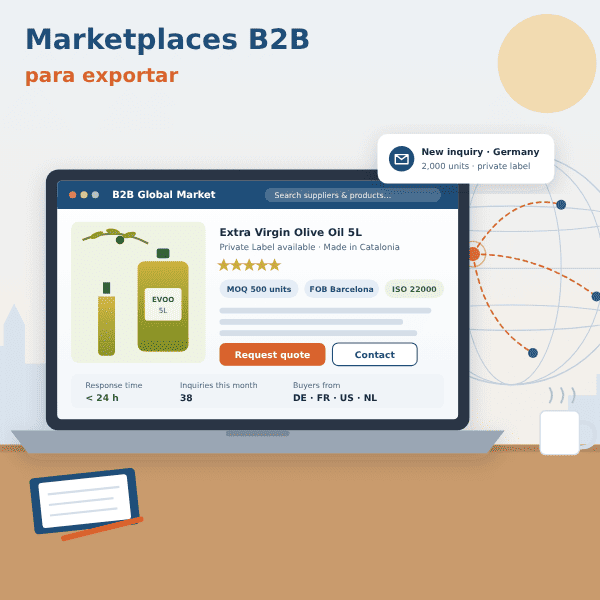
- Premium olive oil: A producer targets British importers and specialist food retailers, presenting its packaging options, certifications, minimum order quantities and delivery terms.
- Agricultural machinery: A manufacturer uses Agriaffaires to showcase equipment and attract enquiries from agricultural professionals.
- Natural cosmetics: A manufacturer lists private-label products on Alibaba.com, specifying minimum order quantities (MOQs), customisation options and available certifications.
How to Use Marketplaces B2B for Exporting in Six Steps
1. Choose One or Two Platforms
Avoid spreading your resources across too many marketplaces at the beginning. Check how many active buyers each platform attracts in your sector and whether its audience includes UK importers, distributors or retailers.
2. Protect Your Brand Before Expanding Internationally
Consider registering your trademark in the UK before publishing your products. Check existing registrations and procedures through the UK Intellectual Property Office.
3. Create a Product Listing That Converts
B2B buyers need clear, accurate information to evaluate suppliers. Your product listing should include:
- A descriptive title containing relevant search keywords.
- Professional product photographs.
- Technical specifications and product descriptions.
- Available certifications and compliance information.
- Pricing or a clear quotation process.
- Minimum order quantity (MOQ).
- Production and delivery lead times.
- Applicable Incoterms and agreed delivery locations.
Use clear English and terminology suited to international buyers. Depending on your product category, you may also need to address UK labelling, safety, conformity or import documentation requirements.
Example of an effective product title:
Extra Virgin Olive Oil 5L – Private Label Available – MOQ 500 Units – Delivery to the UK
This title communicates the product, pack size, private-label option and minimum order quantity. The full listing should also explain pricing, certifications, delivery terms and product availability.
4. Respond to Buyer Enquiries Within 24 Hours Where Possible
Fast, relevant communication helps build trust. Some marketplaces, including Alibaba.com, provide supplier response metrics.
Qualify each enquiry by checking the buyer’s business, required volumes, delivery destination, expected lead times and purchasing requirements. Tailor your quotation to the opportunity rather than sending a generic reply.
5. Invest in Paid Promotion Once Your Listing Is Effective
Improve your product title, photographs and commercial information before paying for additional visibility. Then test promotional options and measure whether they generate qualified enquiries and profitable orders.
6. Measure Results Every Month
Track:
- Product listing views.
- Number of enquiries received.
- Qualified leads.
- Quotations sent.
- Orders secured.
- Customer acquisition costs.
- Gross margin after marketplace and export-related costs.
Record your contacts in a CRM system and follow up consistently.
Protect your margins: include subscriptions, commissions, advertising, packaging, transport, insurance and applicable customs-related costs in your calculations. Depending on the transaction, import VAT and other charges may also affect the buyer’s total landed cost.
Four Common Mistakes When Using Marketplaces B2B for Exporting
- Joining too many platforms. One well-managed marketplace can be more effective than several poorly maintained accounts.
- Publishing incomplete listings. Missing technical specifications, poor photographs and unclear commercial terms discourage international buyers.
- Responding too slowly. Delayed replies can result in lost opportunities when buyers are comparing several suppliers.
- Ignoring the true cost of exporting. Commissions, advertising, transport and compliance costs can turn apparently successful sales into unprofitable transactions.

FAQ: Marketplaces B2B for Exporting
What are the best marketplaces B2B for exporting?
The answer depends on your industry and target buyers. Alibaba.com provides broad international reach, while Europages and Kompass can help identify potential distributors and business partners. Faire focuses on wholesale trade with retailers, while specialist platforms serve particular industries.
Before subscribing, check the platform’s active UK buyer base, eligibility requirements and pricing structure.
How much do marketplaces B2B for exporting cost?
Costs vary by platform and may include annual subscriptions, transaction commissions, advertising and additional services. Calculate the total cost of acquiring a customer, including logistics, before setting your export prices.
How many B2B marketplaces should an SME use?
Start with one or two. Optimise your listings, respond promptly to enquiries and measure results before expanding to additional platforms.
What language should I use for my product listing?
Use English for the UK market, with clear product descriptions, technical specifications, certifications, minimum order quantities and applicable Incoterms. Check whether your products require additional UK-specific labelling or compliance information.
Are there grants for using marketplaces B2B for exporting?
Potential support depends on where your business is established, the type of activity and the funding programmes currently available.
For Catalan SMEs
- ACCIÓ: The Catalan Government’s business competitiveness agency offers internationalisation services and programmes. Check current calls and eligible expenditure before assuming marketplace subscriptions or advertising costs qualify.
- Chambers of commerce and export organisations: These may provide market information, international trade advice and business development support.
- Regional and European programmes: Certain initiatives may support international expansion or digital transformation, depending on eligibility and the applicable rules.
For UK-based SMEs
- Department for Business and Trade: Provides information and support for UK businesses looking to develop international trade.
Always confirm eligibility, deadlines and eligible expenses with the relevant organisation before committing expenditure.
Conclusion: Make B2B Marketplaces for Exporting Part of Your International Growth Strategy
B2B Marketplaces for exporting can help SMEs identify overseas buyers, test demand and develop new commercial relationships without immediately investing in a local sales operation.
To achieve sustainable results, choose platforms that match your industry, publish detailed product listings in English, respond quickly to enquiries, understand UK import requirements and calculate the profitability of each order.
At Barcelona Export, we help businesses assess their export potential, identify suitable markets and sales channels, select relevant B2B marketplaces and develop a tailored international business development plan.
Would you like to identify the most suitable B2B marketplaces for exporting your products? Contact Barcelona Export to explore the options for your sector and export objectives.