Catalunya Exporta Roadmap: the free guide to getting started with exporting in a structured way

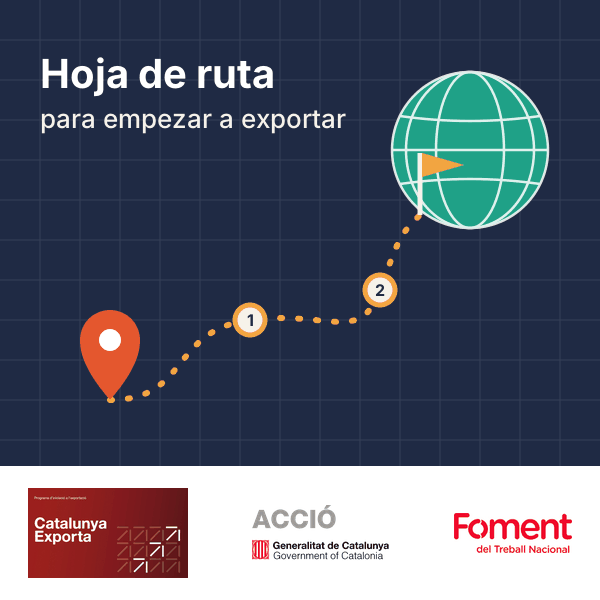
The Catalunya Exporta roadmap is a free diagnostic service funded by ACCIÓ that assesses a company’s starting point and defines the key elements of its export strategy. It is prepared by an accredited internationalisation support agent and is designed for companies that do not yet sell abroad or have only recently started exporting. Its objective is simple: to ensure that a company’s first step into international markets is guided by a plan rather than intuition.
In this article, we explain what the programme is, what the roadmap assesses, who prepares it and how to get the most out of it.
What is Catalunya Exporta?
Catalunya Exporta is ACCIÓ’s export initiation programme. ACCIÓ is the agency for business competitiveness of the Government of Catalonia. The programme is part of the Responem plan and, according to information published in February 2026, aims to help up to 2,000 companies that have never sold abroad start exporting within three years. The goal is for half of them to become regular exporters before 2030. The programme has a budget of €3 million.
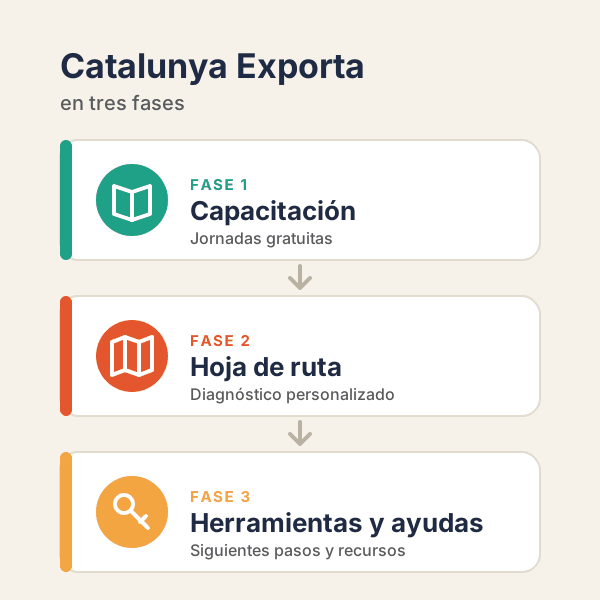
The programme is organised into three phases:
- Training sessions. Free sessions covering the fundamentals of international trade, including Incoterms, digitalisation and international sales management.
- Catalunya Exporta roadmap. A personalised assessment of the company’s export potential, which we explain below.
- Tools and support schemes. Once the assessment has been completed, ACCIÓ helps identify the grants, services and tools best suited to each company’s project.
Who prepares the Catalunya Exporta roadmap?
The Catalunya Exporta roadmap is prepared by an internationalisation support agent accredited by ACCIÓ. These agents include chambers of commerce, business associations and specialist consultancies. Companies can choose the agent that best matches their sector and working methods. If they are unsure which one to select, they can submit a form and ACCIÓ will assign an agent.
The service is free for the company because it is funded by ACCIÓ. The process combines interviews with management, a review of company information and an analysis of its existing channels.
What does a Catalunya Exporta roadmap assess? The 12 sections
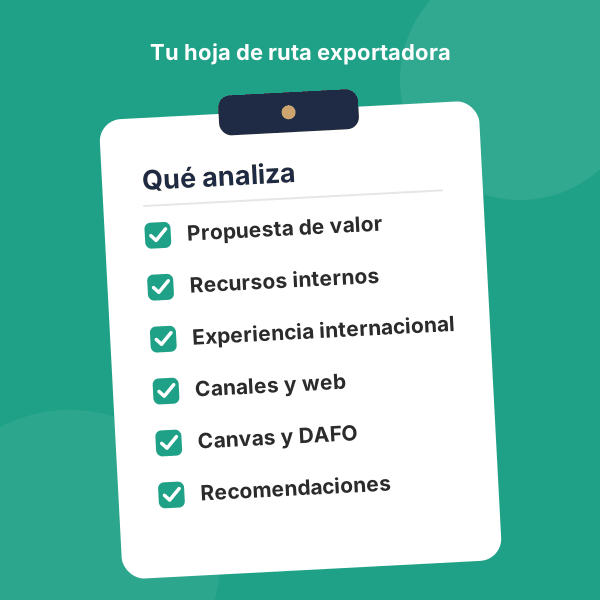
The Catalunya Exporta roadmap follows a clearly defined structure. These are the sections it typically includes and what each one is designed to achieve:
- Company profile. Basic details, sector and contact person.
- Company description. Products or services, customers and current markets. This section often reveals that a company is already selling to foreign customers without leaving its domestic market, for example through tourism.
- International experience. Countries already explored, previous contacts, distributors or partners, and certifications required to sell abroad.
- Organisational structure. Who could take responsibility for the international project and how much time they could dedicate to it.
- Financial capacity. Available resources for travel, product adaptation or promotional investment, and the sources of the company’s revenue.
- Communication channels and customer access. Website, social media, newsletter and catalogues. This usually includes a basic website audit covering indexing, page titles, meta descriptions, image alt text, versions in other languages and security.
- Preliminary Business Model Canvas. A concise business model outlining the value proposition and the customer segments the company could target abroad.
- SWOT analysis. The company’s strengths, weaknesses, opportunities and threats in relation to internationalisation.
- Sustainability and gender equality. Environmental and social measures, as well as equality initiatives, which are increasingly valued by international customers and distributors.
- Reflection. The company’s objectives and underlying reasons for expanding abroad: diversifying risk, growing, increasing brand recognition or innovating.
- Final recommendations. Specific next steps and public-sector resources suited to the company.
- Conclusions. An overall assessment of the company’s export potential.
Why internal reflection comes before market selection
Many companies begin their international journey by asking which country they should target. The Catalunya Exporta roadmap reverses this order, first asking what makes the company’s offering different and what resources it has available.
This reflection helps prevent common mistakes, such as entering a market without a translated website, sufficient stock or anyone on the team with time to dedicate to the project. It also helps turn what already works in the domestic market into a compelling export sales proposition. Once a business model has been validated at home, the challenge is no longer simply to “sell more abroad” but to “replicate abroad what already works at home”.
The Business Model Canvas and SWOT analysis are the two key tools in this phase. The first requires the company to articulate its value proposition in a clear sentence. The second brings potential risks to light, such as dependence on a small number of sales channels, rising raw material and logistics costs, or the risk of copycat products in digital markets.
What recommendations does the Catalunya Exporta roadmap typically include?
The Catalunya Exporta roadmap does not end with a diagnosis: it provides a way forward. Its recommendations often connect companies with the public and private ecosystem supporting exports, which is extensive in Catalonia:
- ACCIÓ’s Internationalisation Voucher, which helps fund services such as an internationalisation plan, market research for priority countries, or the implementation of an export strategy through active sales prospecting carried out by expert advisers accredited by ACCIÓ.
- ICEX Next, ICEX’s programme for structuring the international strategy of SMEs starting to export.
- Chambers of commerce and business associations such as PIMEC, which offer training, trade missions and B2B networking events.
- Enterprise Europe Network, which helps companies find partners, distributors and commercial agents in Europe.
These support schemes are complemented by practical recommendations, such as improving website visibility in other languages, preparing a B2B sales presentation in English, or identifying the two or three priority markets to target first.
How to get the most out of the Catalunya Exporta roadmap
The quality of the Catalunya Exporta roadmap depends largely on the information the company provides. The following tips can help:
- Prepare your figures before the interview: revenue by channel, key customers and any previous international contacts.
- Be realistic about your resources: team availability, budget and production capacity.
- Involve senior management: exporting is a strategic decision and requires a clearly designated person in charge.
- Set priorities: it is better to start with one or two carefully selected markets than to target ten at once.
- Turn the document into an action plan, with deadlines, responsibilities and a budget, and review it again after a few months.
Frequently asked questions about the Catalunya Exporta roadmap
How much does the Catalunya Exporta roadmap cost?
Nothing. The service is free for the company because it is funded by ACCIÓ.
Who can apply?
It is intended for companies that do not yet export or are taking their first steps into international markets and want to establish a stable export activity.
How do you apply?
Through the Catalunya Exporta page on ACCIÓ’s website, selecting Foment del Treball as the organisation.
Take the first step: apply for a completely free Catalunya Exporta roadmap
Exporting is about more than increasing sales. It is a strategic decision that can diversify risk, strengthen your brand and open up new business opportunities. The Catalunya Exporta roadmap offers a free, structured way to get started.
If you are considering taking the next step, Barcelona Export can support you in preparing your roadmap and planning the steps that follow. Contact us.